
Unifying User Insights
Consolidating fragmented personas to create a cohesive, user-centered approach for the Alight Worklife platform.
Overview
Alight Solutions
Role: Senior UX Designer
Design Methods: Double Diamond Framework, User Personas, & UX Workshops
Tools: Miro, Jira, & Microsoft Office tools
Sector: Wellbeing, Human Resources, SaaS
Context
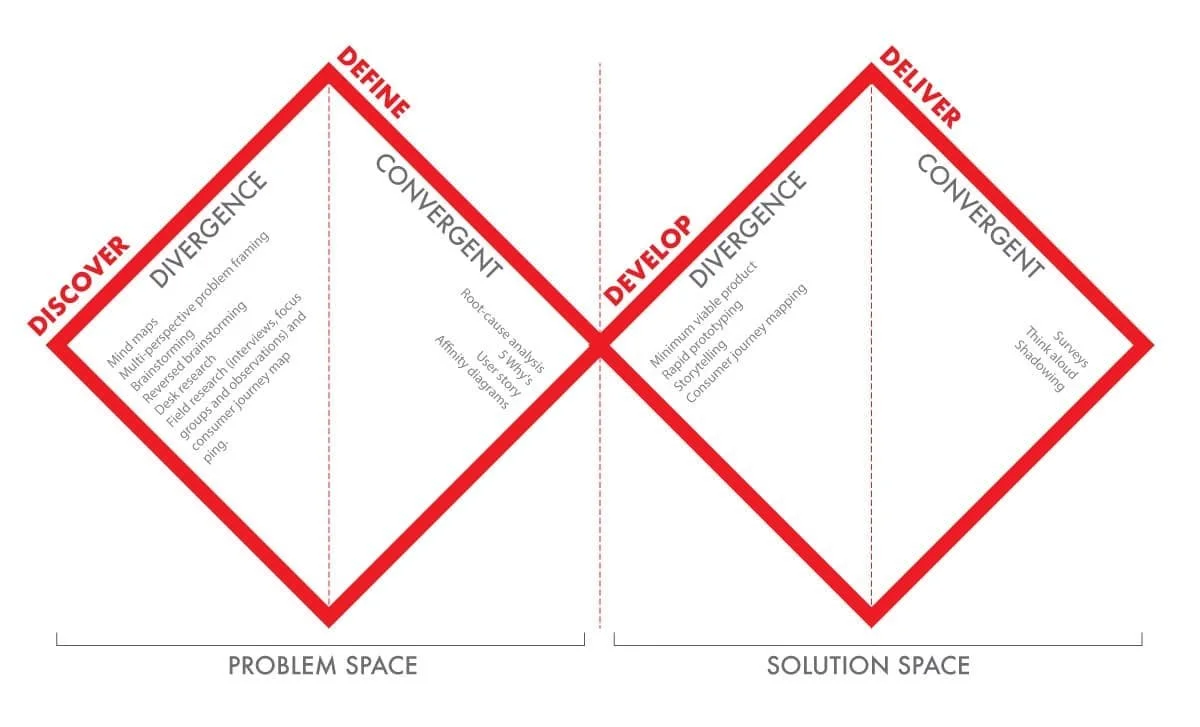
Although user personas are usually created during the 'define' stage of design, I took the lead in developing three universal personas throughout the iterative design process using the Double Diamond framework, as these personas were intended to serve as a long-term product for our organization. These personas represented over 10 million users on a wellbeing and employee benefits platform called Alight Worklife. This initiaitve created a cohesive source of truth for product teams, improving focus and reducing fragmented user experiences.
The Problem
Dozens of diverse user personas created by different product teams caused inconsistent experiences on the Alight Worklife platform. Product Owners prioritized user stories over personas, leading to inconsistent design approaches that failed to address users' needs holistically. Product teams were repeatedly wasting time onboarding to new personas with unique names, needs, and wants for each project, while also struggling to adapt to different persona layouts.
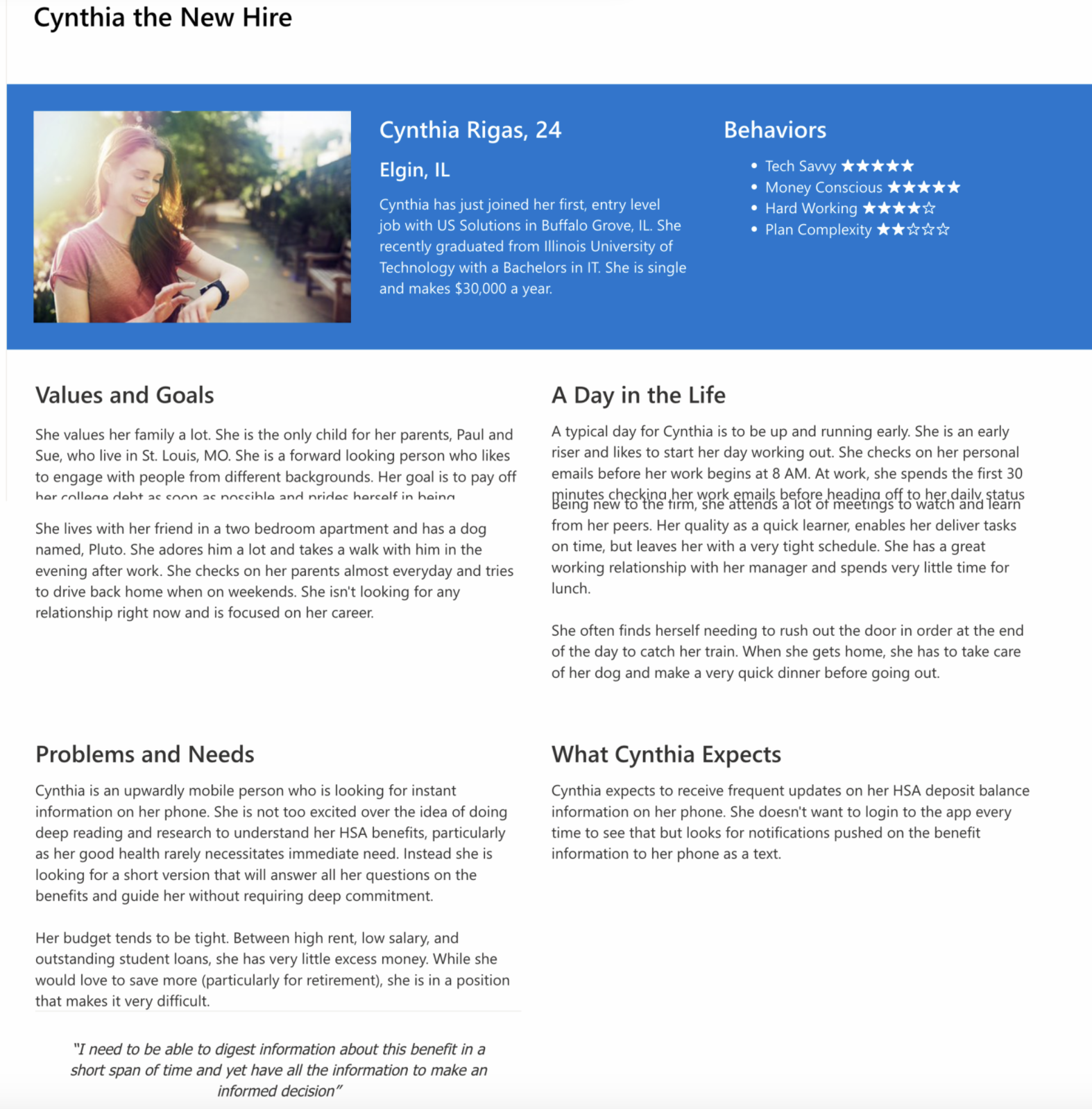
A life stage persona focused on a specific feature.
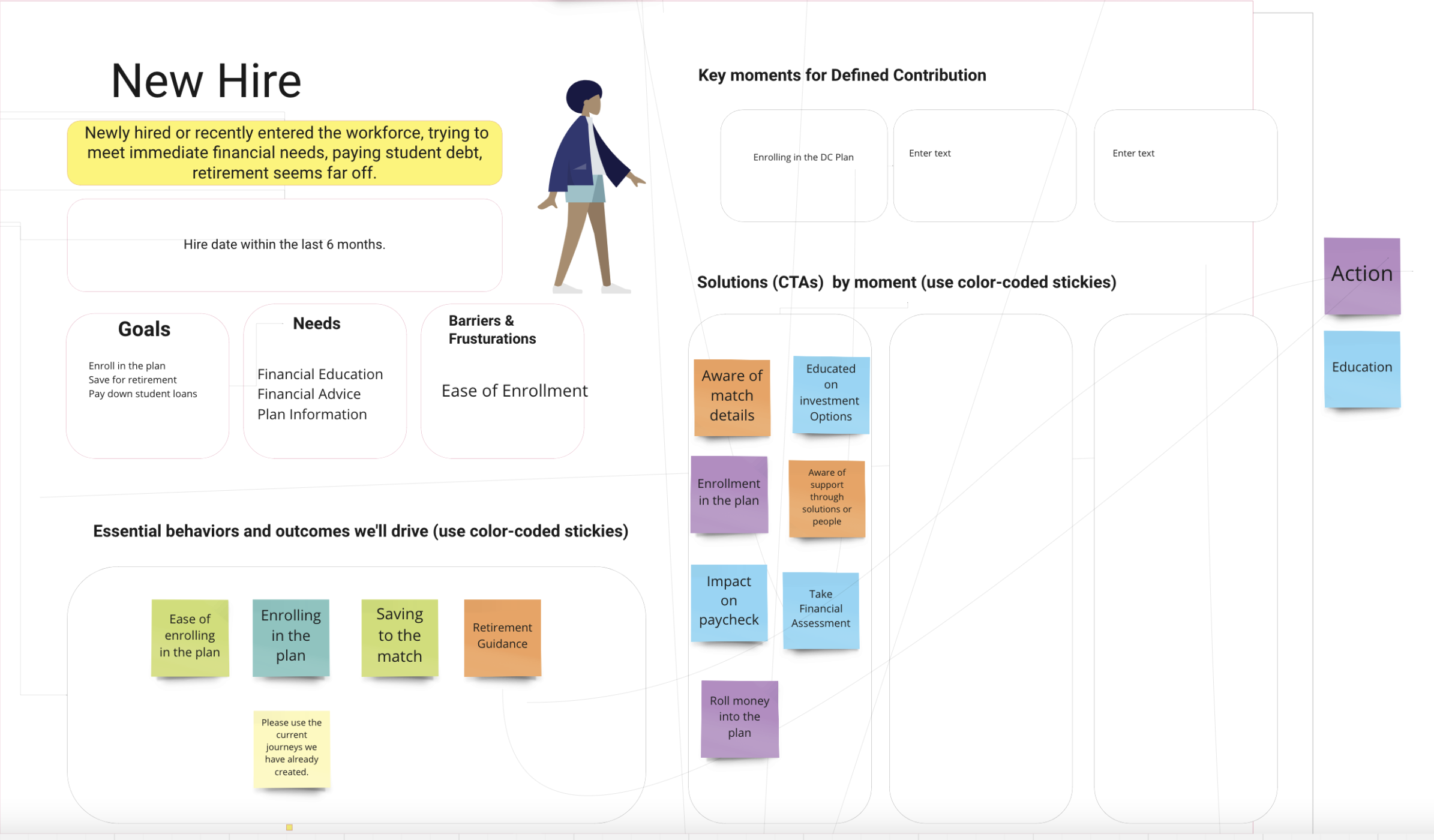
An incomplete life stage persona focused on wealth.
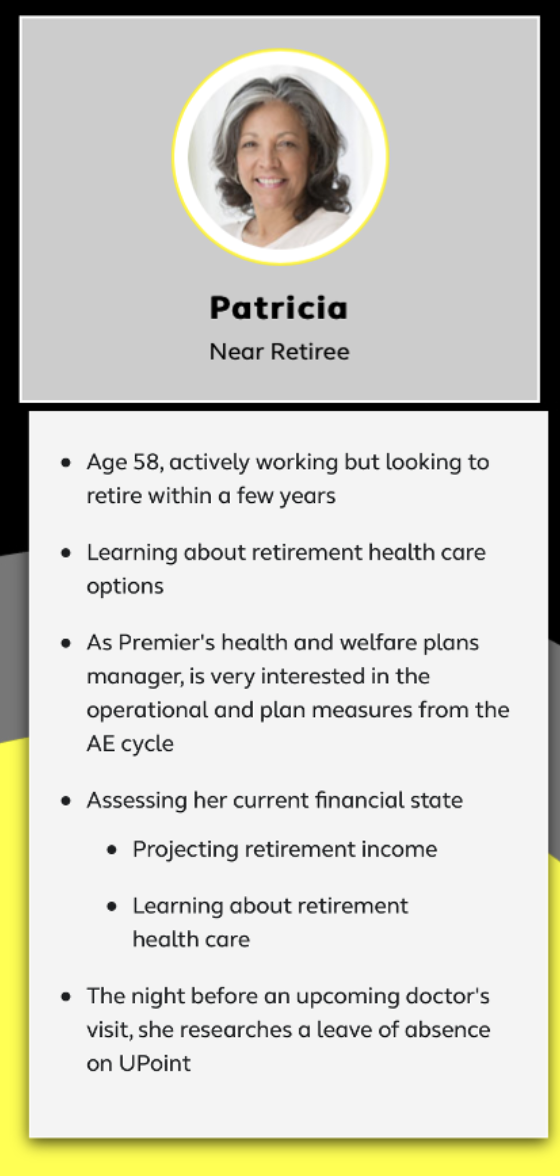
A short life stage persona focused on the entire platform.
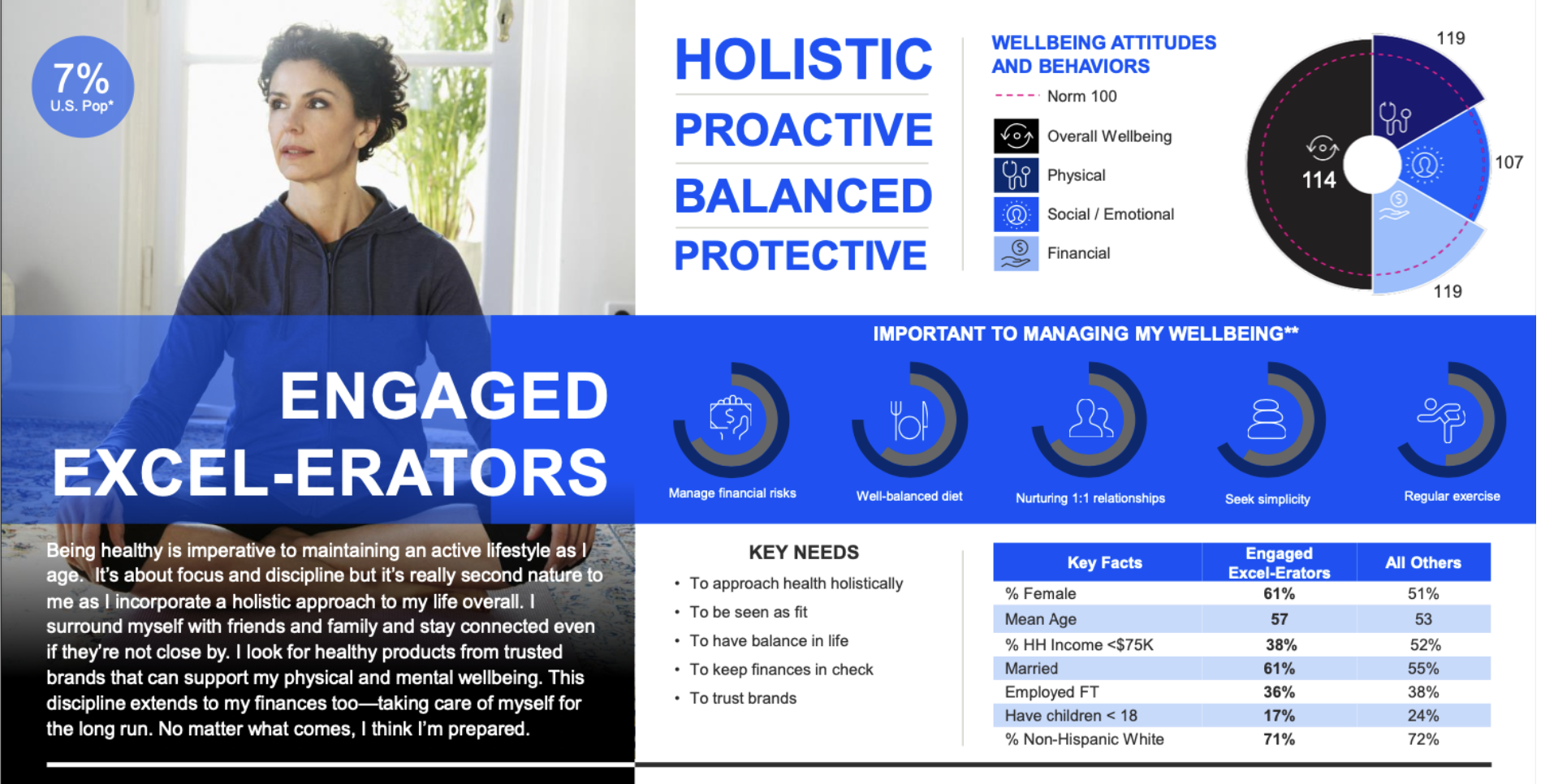
An overly detailed user persona.
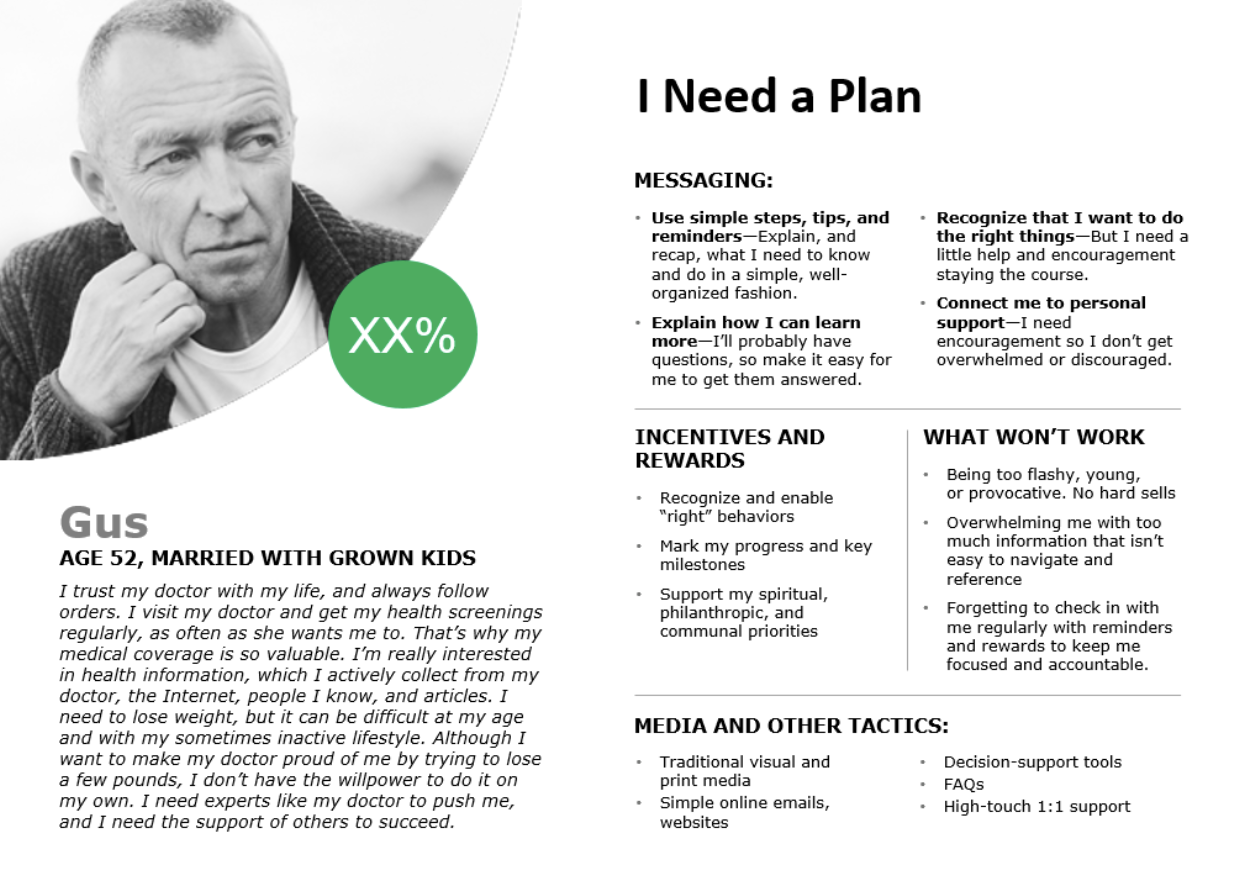
A persona focused on enrollment.
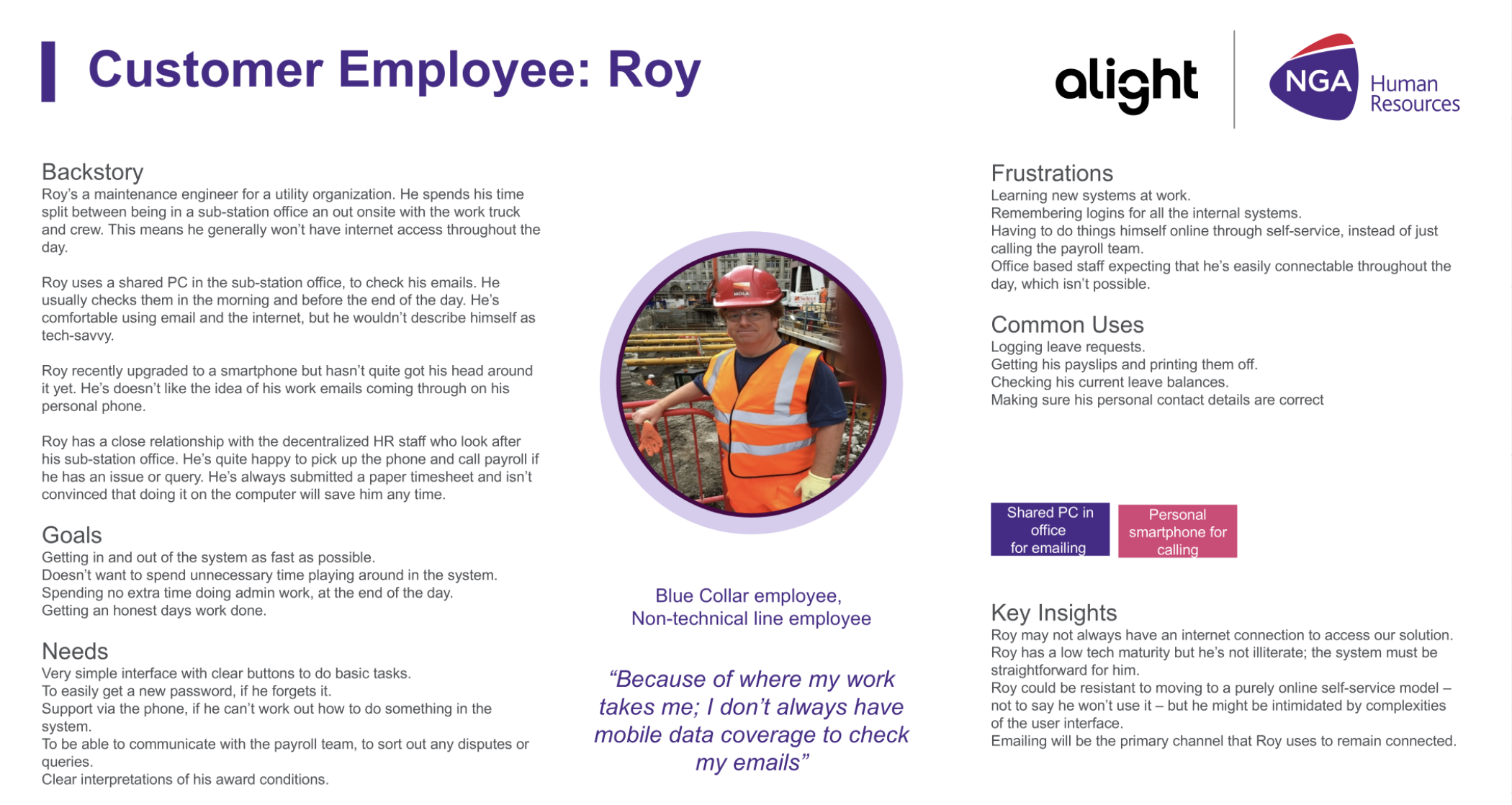
A closer to the target user persona.
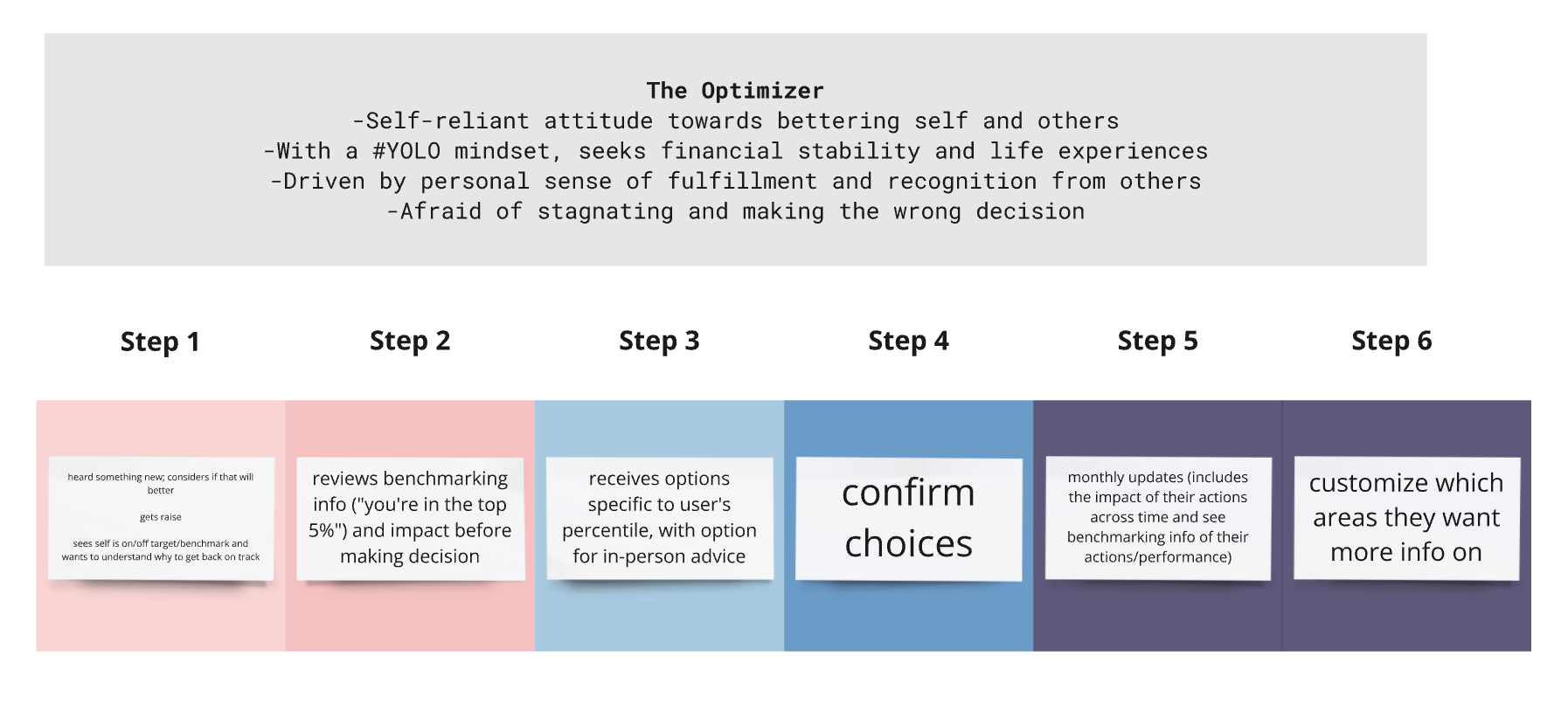
A limited user persona focused on annual enrollment.
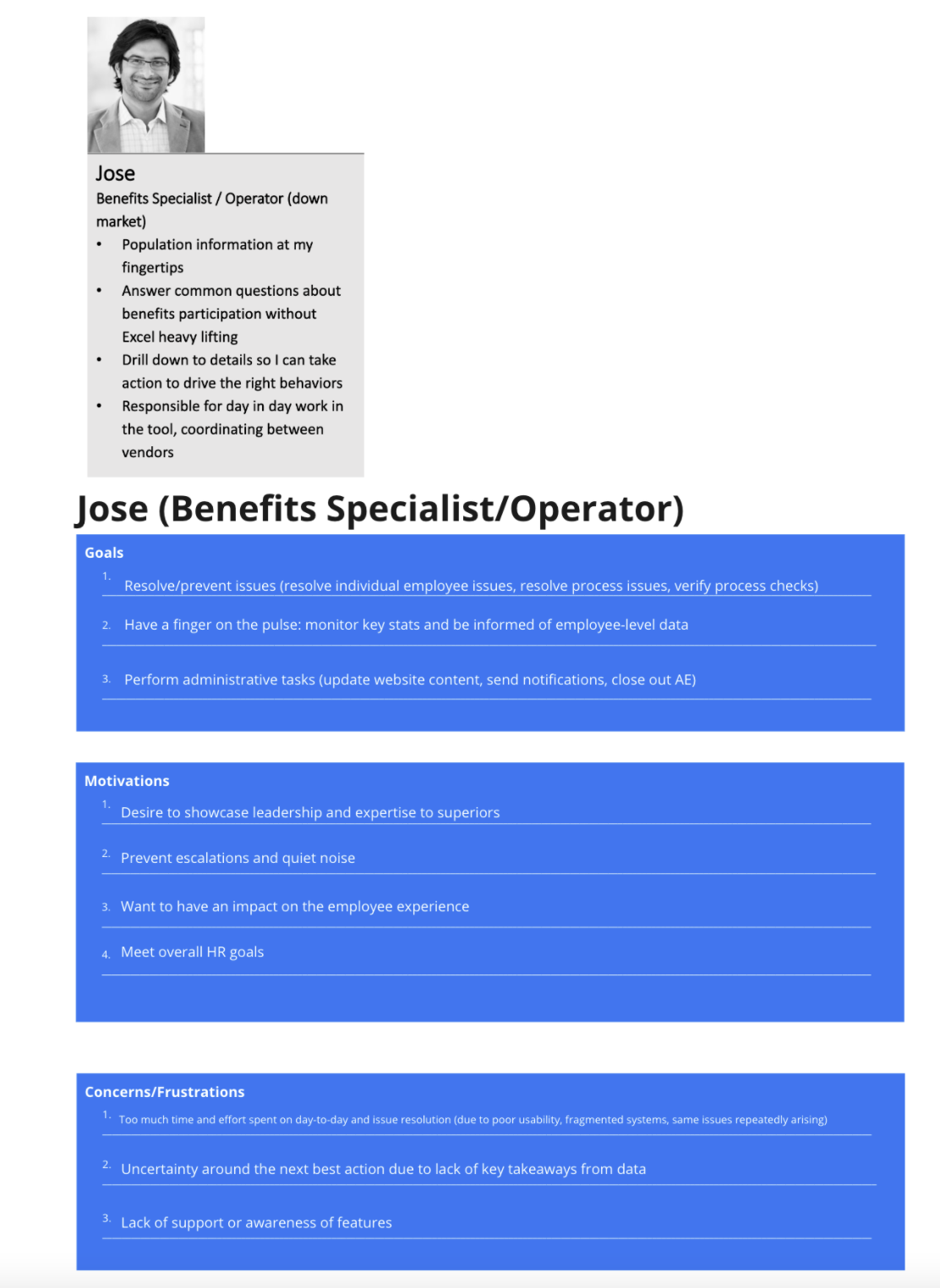
A user persona who manages the platform.
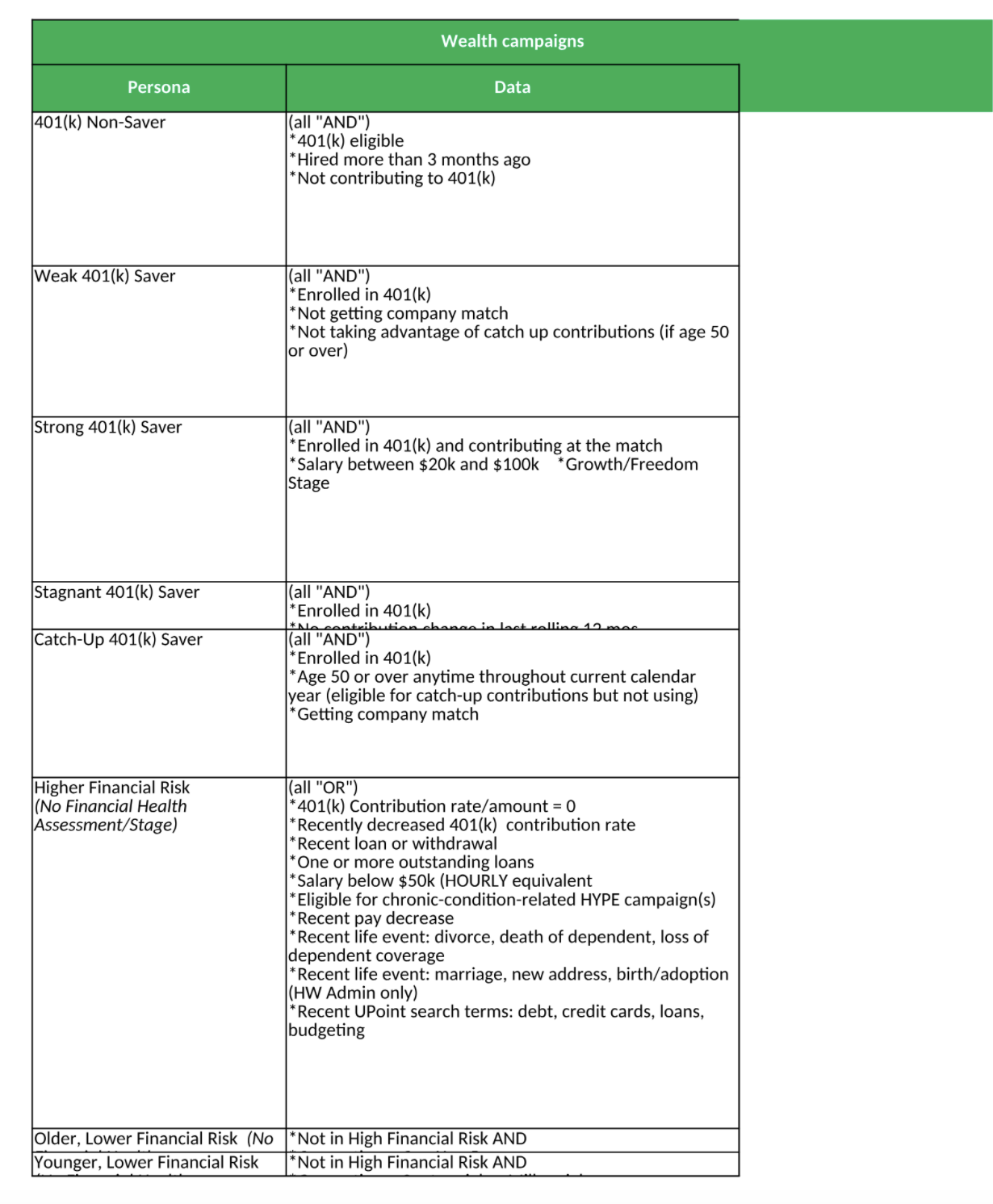
A wealth focused user personas that are limited.
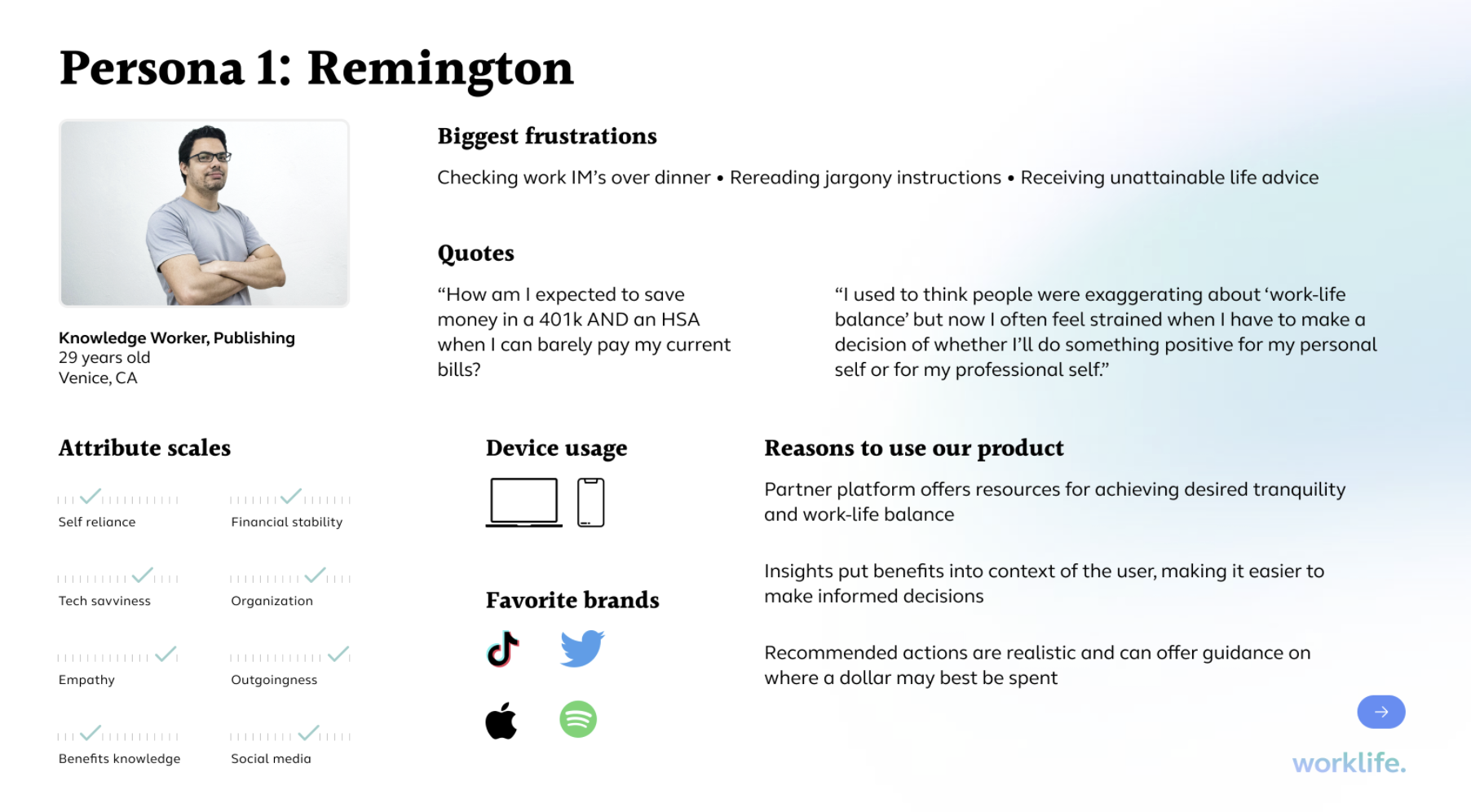
A wellbeing focused user persona with subjective content.
Goals
This initiative sought to eliminate the complexity of designing for every feature, domain, and demographic by creating universal user personas for the Alight Worklife platform, ensuring consistency in both design and product development. The focus was on developing three universal personas that could guide the platform's approach to employee benefits, wellbeing, and engagement, while maintaining adaptability and scalability.
Success Metrics
Create universal user personas that represent the core motivations and challenges of a diverse user base, ensuring alignment across product teams.
Reduce inconsistencies in user experiences by replacing fragmented, team-specific personas with a cohesive and adaptable user artifact.
Improve cross-departmental alignment by providing a shared set of personas that guide design and development decisions across all teams.
Enable data-driven decision-making by synthesizing qualitative data and insights into the persona development process, ensuring solutions are based on comprehensive user research.
Methodology
Over one year, we used the Double Diamond framework to iteratively establish user personas through continuous feedback.
Data Analysis
The process started by analyzing dozens of existing personas and third-party insights with the goal of identifying what works and what doesn’t for the needs of our product team members.
User Interviews
We then interviewed product designers and product managers on the usefulness of existing persona features. The research team was then able to provide recommendations from interview findings and draft definitions and examples of key persona criteria.
Persona Workshops
I then facilitated workshops where stakeholders converged on common persona criteria patterns and persona hypotheses. These personas were then tested with product owners, managers, and product leadership, incorporating inclusive elements into the final personas.
Recommendations on next steps based on user interviews.
User Personas
Through iterative development, we synthesized qualitative data to create three universal personas:
Passive Paulo: Content with the status quo and prioritizes family over his own wellbeing needs.
Maximizing Monica: Is laser focused on knowing the ins and outs of all of her employer benefits, but struggles to connect all the dots.
Doubtful Dolores: Is generally aware of her benefits, but is often overwhelmed when making choices.
Passive Paulo universal persona.
Challenges & Design Decisions
Challenge 1: Timing & Coordination
Issues
Securing 1-on-1 time with product leaders was difficult due to scheduling conflicts, and competing business priorities added delays. To mitigate these challenges, it was important to remain flexible and adapt to change by having clear channels of communication and updating our project tracking system to ensure alignment.
Challenge 2: Balancing Specificity and Generalization
Many product teams wanted personas tailored to their specific domains. I tackled this by focusing on core user motivations and behaviors that transcended individual product features.
Challenge 3: Team Misalignment
A Junior UX researcher advocated for the more segmented personas based on user interview findings, focusing solely on user wants. To address this, I held alignment and listening sessions to understand their perspective while emphasizing the need to balance user desires with the project's strategic goals. This ensured that the personas remained user-centered while still aligning with the overall objectives of the project.
Workshop discussing design rationale.
Results
I presented Alight’s first user personas to the design and product teams, streamlining the design process and unifying development. With a clear focus on employee benefits, wellbeing, and engagement, the personas could then be applied in building empathy and designing experiences targeting improved user satisfaction. Ongoing feedback from product leaders ensured the personas stayed relevant and adaptable to evolving needs.
A more inclusive user persona refined through the Double Diamond framework.
Business Impact & Outcomes
Establishing three universal user personas significantly impacted the business in several ways:
Cross-Department Alignment: The personas aligned various product teams and departments, reducing fragmented approaches and ensuring a unified focus on user needs. This alignment streamlined the design process and improved collaboration across the organization.
Informed Decision Making: The development and testing of personas with product owners, managers, and leadership led to data-driven insights that guided product development and design decisions. This approach ensured that decisions were based on a comprehensive understanding of user motivations and challenges, enhancing the relevance and effectiveness of future solutions.
Enhanced User Experience: With a clearer focus on user needs, goals, and challenges in the employee benefits and wellbeing space, the personas informed designs that resonated better with users, leading to increased usability, satisfaction and engagement.