Unlocking Research Potential
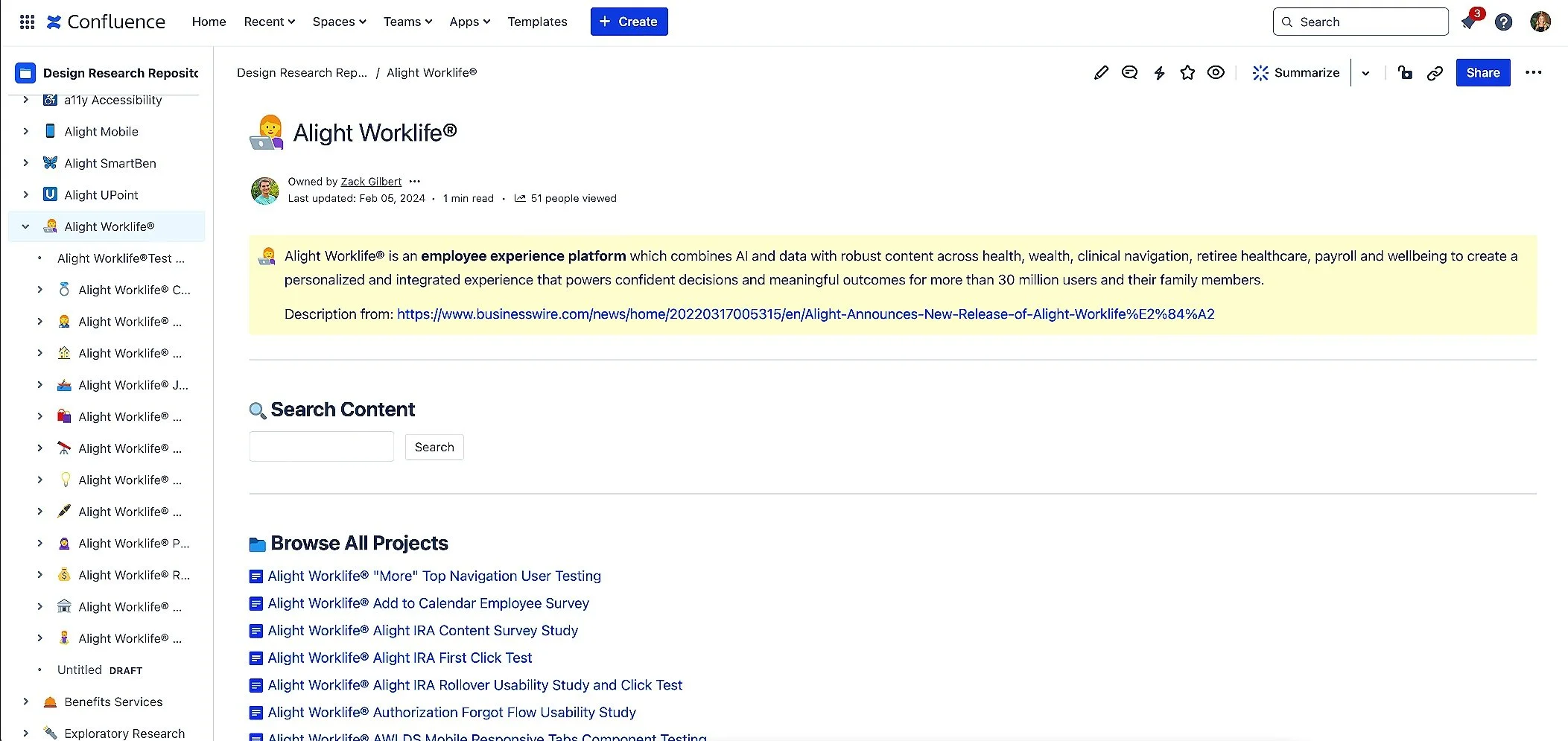
Facing inefficiencies with their SharePoint repository, Alight Solutions struggled to locate and utilize research insights. I led the redesign to Confluence, which streamlined access, improved organization, and fostered collaboration, allowing teams to make faster, informed design decisions.
Overview
Alight Solutions
Sector: Research Operations, Tools, Knowledge, and Governance
My Role: UX Researcher
Team: UX Research Intern, Junior UX Researcher, Director of Research
Tools: Confluence, UserZoom, Figma, Miro
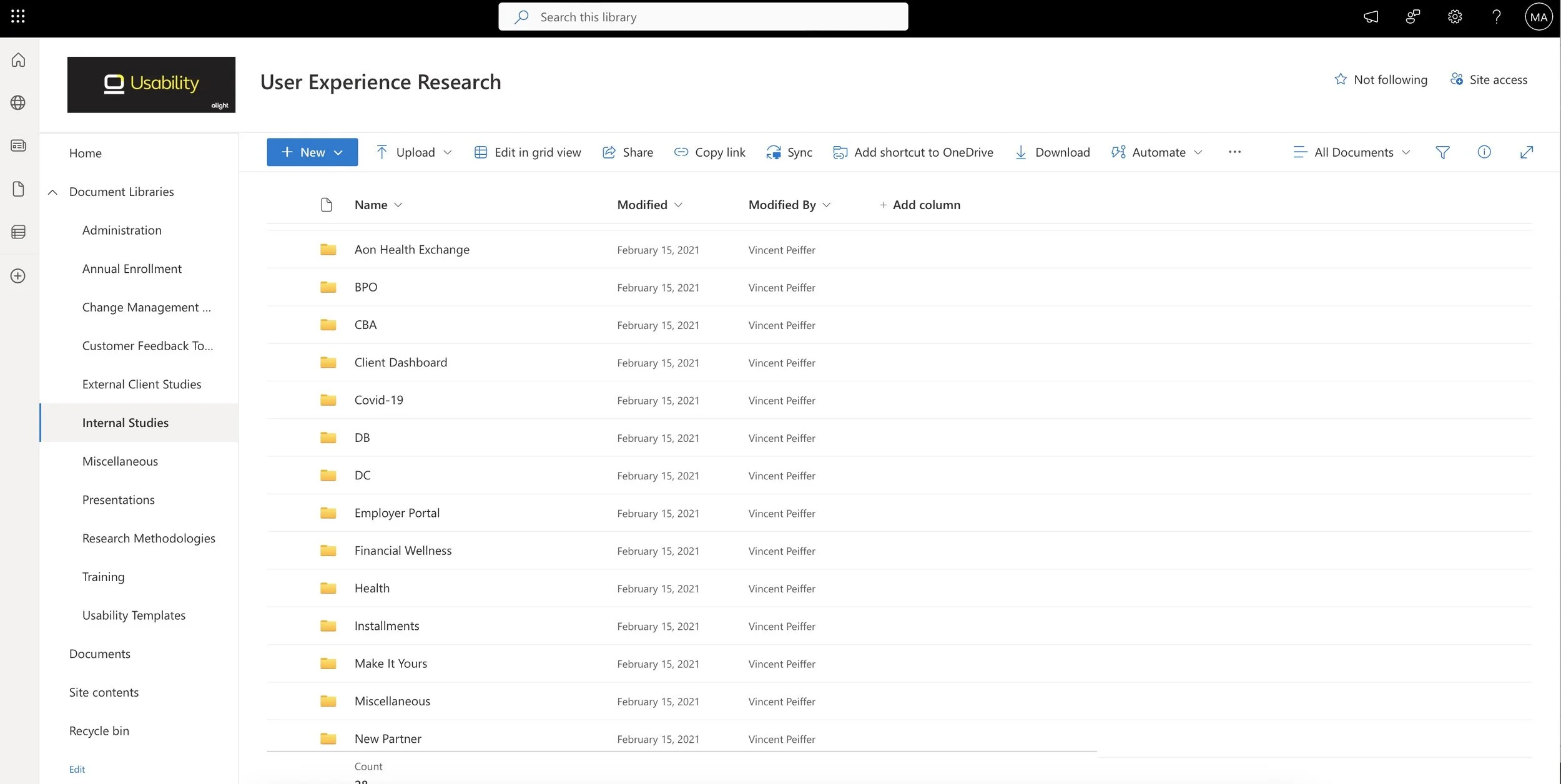
The poorly structured SharePoint repository at Alight Solutions created inefficiencies in accessing research data and hindered informed design decisions.
Context
Alight Solutions inherited a poorly structured SharePoint research repository, which had become a bottleneck for the design team and stakeholders. The repository's inefficiencies hampered the ability to save, locate, and utilize research data, leading to missed opportunities for informed design decisions. The challenge was to create a user-friendly and scalable platform that would improve accessibility and boost confidence in the research process, ultimately driving better design and business outcomes.
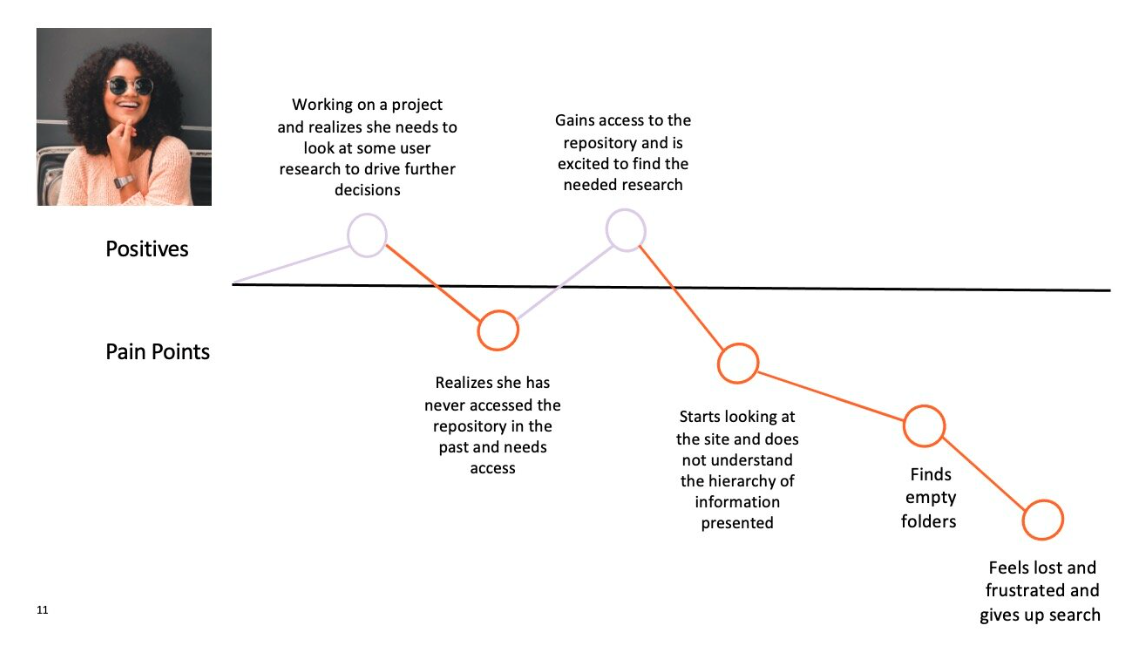
The chaotic structure of the old repository left teams frustrated and unable to fully leverage valuable insights, inspiring me to design a solution that would streamline operations and enhance trust in research data.
The Problem
The existing SharePoint repository was cluttered, difficult to navigate, and lacked clear instructions for use. This led to inefficiencies, as team members struggled to find relevant research data and insights, and researchers were frequently asked to track down previous testing results. The lack of a cohesive structure undermined confidence in the repository's reliability, leading to its abandonment by key users. Without a robust system for organizing and accessing research findings, the design team’s ability to make data-driven decisions was severely hindered.
Objective
The goal was to design and implement a new research repository that would streamline the process of accessing and storing research findings. The solution needed to ensure ease of use, improve organization, and inspire confidence in its reliability. Additionally, it was critical that the new platform foster collaboration among teams and support self-service capabilities for research and data collection.
Strategic Goals:
Enhance Operational Efficiency: Simplify the process for storing and retrieving research insights, reducing time wasted navigating an ineffective system.
Increase Confidence in Data: Build a reliable and well-organized repository that team members trust to provide accurate and up-to-date research.
Foster Cross-Functional Collaboration: Ensure that researchers, designers, and executives can easily access and share research findings to support more informed and aligned decision-making.
Promote Self-Service Capabilities: Enable stakeholders to independently access research data and insights, reducing reliance on researchers for simple tasks.
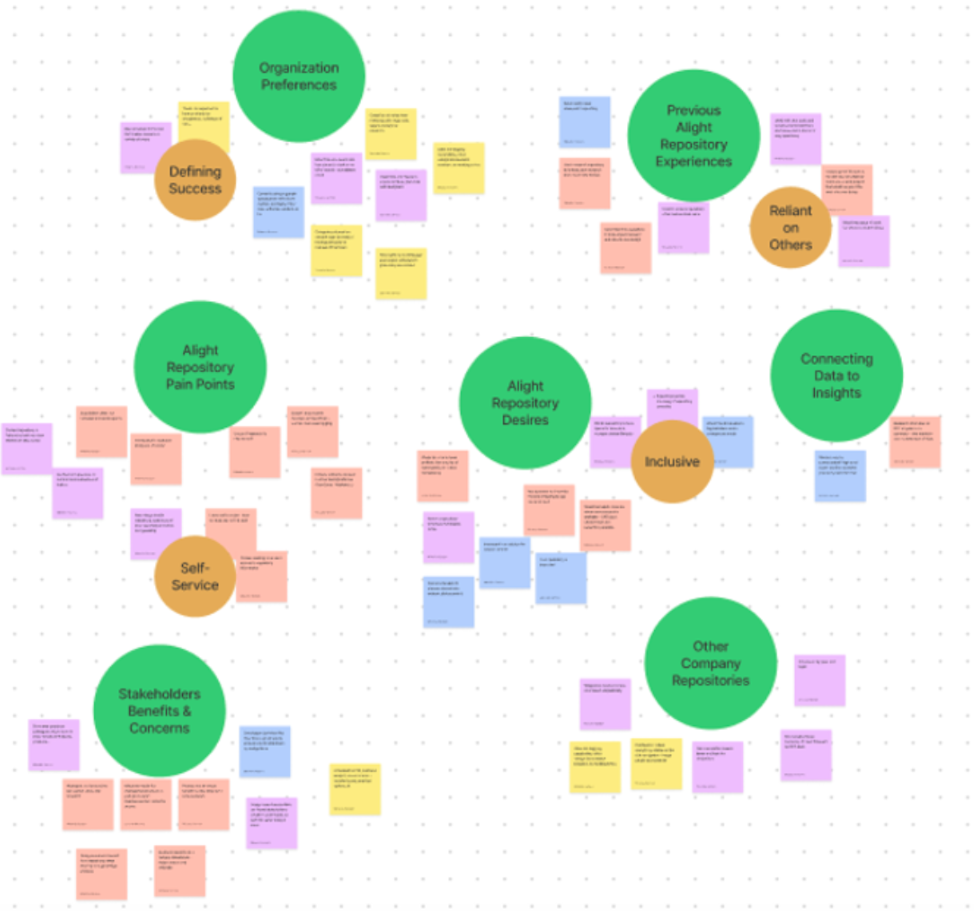
Affinity Mapping stakeholder interviews.
Approach
Stakeholder Interviews: I led a series of interviews with subject matter experts and key stakeholders to uncover pain points with the current repository and gather insights into their needs for a future solution. Common challenges included difficulty navigating the platform, confusion around the repository's purpose, and a desire for more self-service options.
Competitive Analysis: To determine the most effective platform, we conducted a competitive analysis of potential solutions. We compared SharePoint, Confluence, DoveTail, Airtable, and EnjoyHQ based on features such as search functionality, document tagging, and user experience customization. Confluence emerged as the best option, offering superior search capabilities, tagging options, and a customizable interface that met the team's needs.
Prototyping and Testing: After selecting Confluence, we developed wireframes and tested the platform with 12 participants. The usability tests provided critical feedback on the organization of the overview page and research categories, ensuring the final design would be intuitive and user-friendly.
Implementation and Rollout: Once the final design was approved, we implemented Confluence as the new research repository. We also introduced a Repository Guide and an updated Research Request form to assist new users in navigating the platform and coordinating with the research team.
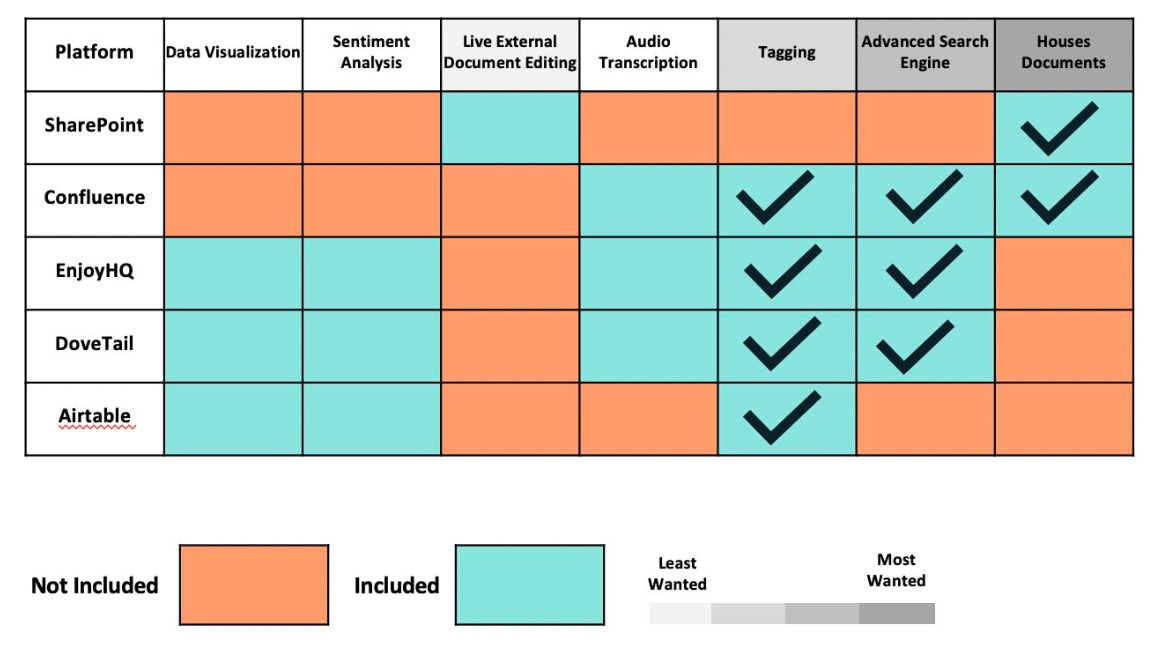
Choosing a new research platform by conducting a competitive analysis of market options and directly addressing user pain points.
Design Decisions & Challenges
Cluttered and Disorganized SharePoint Repository
The inherited SharePoint repository was cluttered, with no clear structure for storing or retrieving research insights. This made it difficult for teams to navigate and resulted in inefficiencies. I made the decision to move to Confluence, a platform that offered better search functionality and organizational capabilities. The transition required defending why Confluence was superior to other alternatives to product and design leadership.Encouraging Team Adoption of the New System
Many product stakeholders were accustomed to the existing platform, despite its inefficiencies, and lacking a clear process to access information. To address this, I introduced a Repository Guide and held training sessions to ensure that all teams were comfortable using the new Confluence repository. This support boosted user confidence and encouraged cross-functional adoption.Ensuring Data Consistency During Migration
Migrating data from the outdated SharePoint repository to Confluence posed a challenge in ensuring no loss or duplication of data. I worked closely with the Junior UX Researchers to perform a comprehensive audit of the existing repository and executed a phased migration plan. This careful approach ensured data integrity and minimized disruptions during the transition.
Leadership & Mentorship
Throughout the redesign of Alight’s research repository, I provided leadership and mentorship to a team that included a UX Research Intern and a Junior UX Researcher, guiding them through each phase of the project and ensuring they had the support and resources needed to contribute effectively. I fostered a collaborative learning environment, allowing them to take ownership of key tasks such as conducting stakeholder interviews, synthesizing research findings, facilitating usability tests, and reflecting on their learnings which gave them valuable hands-on experience in research operations and design thinking. By providing continuous feedback and coaching, I helped them develop critical skills in stakeholder management, problem-solving, and decision-making, ensuring the successful execution of the project while promoting their professional growth.
Redesigned Research Repository layout.
Business Impact & Outcomes
Improved Efficiency: The new Confluence-based repository reduced the time spent searching for research data, allowing team members to focus on applying insights to improve design outcomes. The streamlined organization and intuitive layout made it easier to locate and save data, improving the overall speed and efficiency of the design process.
Increased Confidence in Data: By providing a clear and well-structured repository, we restored confidence among stakeholders that the research data was accurate, up-to-date, and easily accessible. This trust in the system led to a higher rate of usage and better integration of research insights into product decisions.
Enhanced Collaboration: The new repository fostered stronger collaboration between researchers, designers, and executives. With improved access to research findings, cross-functional teams could align more effectively around shared insights, leading to more consistent and informed design decisions.
Empowered Self-Service: By introducing self-service options and clear documentation, stakeholders gained the ability to independently access research data, reducing their reliance on the research team for everyday tasks. This not only empowered team members but also allowed researchers to focus on higher-level strategic work.